
Land trust program targets applicants impacted by displacement
[ad_1]
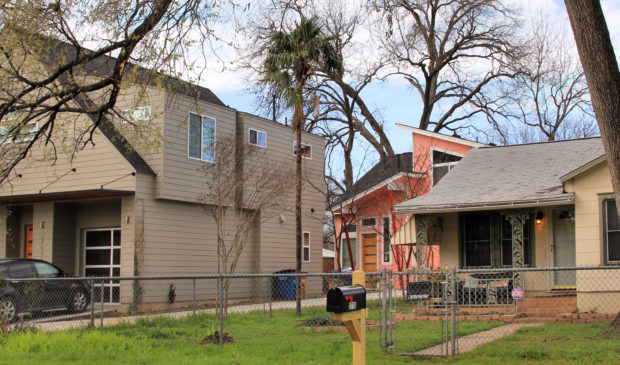
Residents in City Council districts 1 and 6 will have the first chance to purchase one of a cluster of single-family homes the city is making available at affordable prices through the Austin Community Land Trust.
In a memo released last week, Housing and Planning Director Rosie Truelove detailed the timing and methodology for the pilot program that will be used through next year to allocate 28 homes to potential purchasers who have faced the effects of displacement as housing throughout the city has grown more costly.
A home on Linden Street in District 1 will be the first residence made available later this spring, with eight more units in districts 1 and 6 opening to applicants this summer, and four more available in the fall. The remaining 15 homes in districts 1, 2, 4, 5, 6, 7 and 8 will come open in the winter through next summer. The homes, which vary from two bedroom/one bath up to four bedroom/two bath configurations, will be available for purchase from $170,600 for a one-bedroom to $246,300 for a four-bedroom unit, both far below the area’s median single-family home prices that have climbed above $560,000 this year.
The memo spelled out the three types of preference given to applicants in the scoring process and the lottery that will be used to select potential buyers. The preference system is a response to a 2018 Council resolution that sought to use city-owned affordable housing to address the growing impact of gentrification on longtime residents.
City staff had made progress on the pilot program throughout 2019, but it was delayed due to the Covid-19 pandemic.
Scoring preferences will be given to households that currently live or lived after the year 2000 in census tracts identified as gentrifying according to the University of Texas’ Uprooted study; households that have been displaced since 2000 due to natural disaster, government action, or from properties triggering the city’s Tenant Notification and Relocation Assistance Ordinance or the federal Uniform Relocation Act; or households that have immediate family living in the city.
The lottery and application process will be conducted through ACLT-Homes.org.
In addition to matching affordable homes with low-income residents feeling the effects of gentrification, the pilot will provide staff with data on how to refine and later expand its use beyond properties currently controlled by the Austin Housing Finance Corporation. Other homes that could later use the same or a slightly different preference policy include density bonus units or new units created with AHFC funding.
The program takes a novel approach to addressing affordability and gentrification issues by creating an “ownership unit” model that separates the purchase of the home by a selected owner from the ownership of the underlying land, which will remain with AHFC. That model addresses affordability by removing land from the purchase price, and controlling the resale price of the homes through a ground lease and resale formula that keeps the homes affordable for the next owners.
At a recent meeting of Council’s Housing and Planning Committee, Council members praised the plans for the program and asked whether family members and descendants of homebuyers could be willed the homes in the event of the owner’s death (yes, they can).
An earlier memo on the pilot stated that disability considerations will be used for all units that were suitably accessible, and that generational ties and displacement preferences will apply to 50 percent of the affordable units when two or fewer units are available at a time, and 40 percent of the units when three or more are available.
Photo by Larry D. Moore, CC BY 4.0, via Wikimedia Commons.
The Austin Monitor’s work is made possible by donations from the community. Though our reporting covers donors from time to time, we are careful to keep business and editorial efforts separate while maintaining transparency. A complete list of donors is available here, and our code of ethics is explained here.
Join Your Friends and Neighbors
We’re a nonprofit news organization, and we put our service to you above all else. That will never change. But public-service journalism requires community support from readers like you. Will you join your friends and neighbors to support our work and mission?
[ad_2]
Source link